Materials for Texture Studies: Tools, Papers, and Marks
Selecting materials that respond to surface
Texture study sits at the meeting point of observation and material response. The media you choose should amplify the qualities you want to read: tooth for rubbings, liquids for washes that settle into cracks, and hard points for fine striation. This article outlines practical choices and trade-offs.
Papers and surfaces
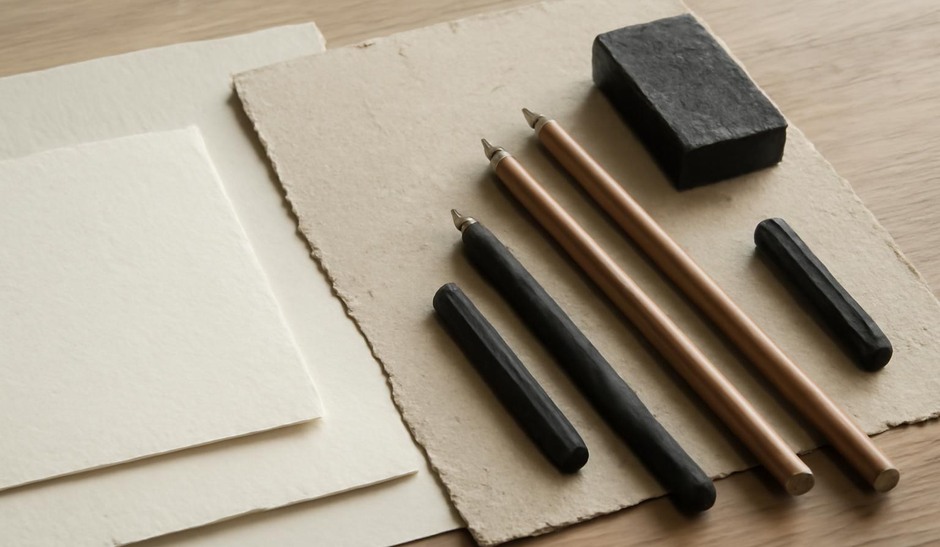
Paper voice matters. Toothy papers, such as cold-pressed watercolor or heavyweight cartridge, take charcoal and graphite rubbings well. Smooth papers facilitate clean ink lines and allow subtle layered wash work. For combined techniques consider a spiral-bound mixed-media pad that tolerates moderate wetness and mechanical abrasion.
Dry media options
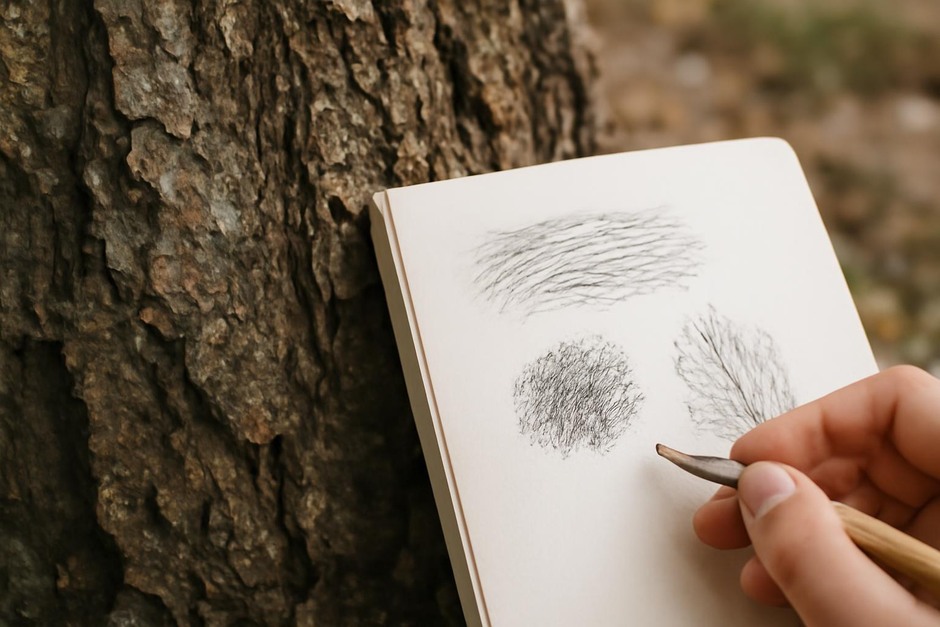
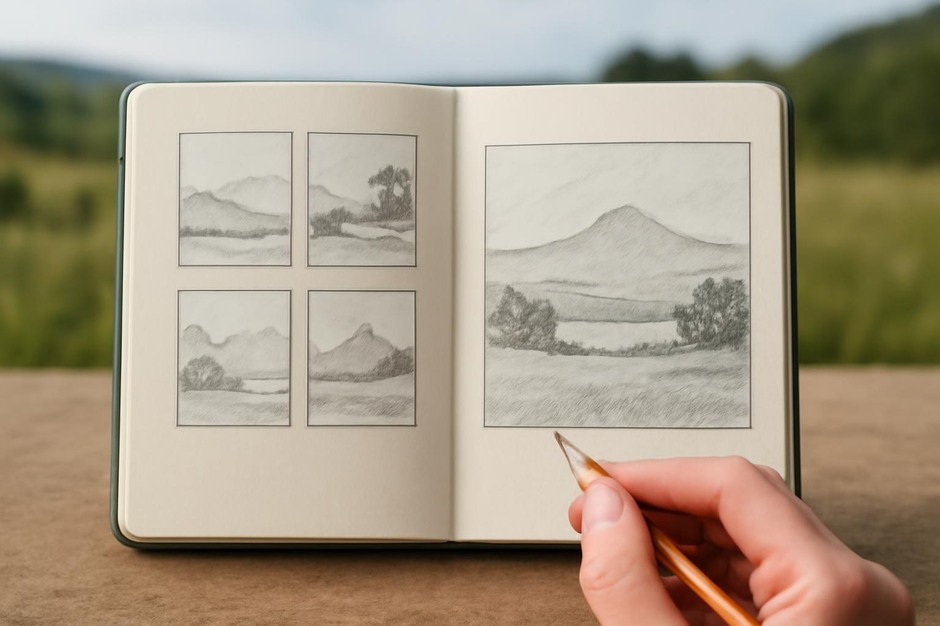
- Graphite Versatile, erasable, and ranging in value. Softer grades pick up texture; harder grades hold fine lines. Use a stubby stick or a flat side of a pencil for broader strokes over texture.
- Charcoal Excellent for high-contrast rubbings and broad tonal fields. Use vine or compressed charcoal depending on permanence needs. Fix lightly if you need to overlay washes.
- Conte and sanguine Warm tones that read well on mid-toned papers. Conte crayons are durable and good for durably marking rough surfaces.
Wet media options
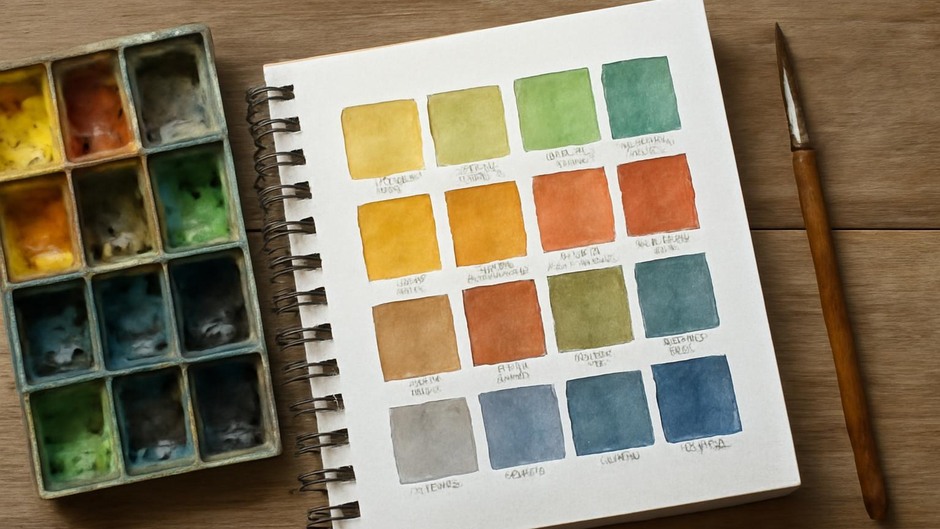
Water-based media behave differently on textured subjects. Small puddles of diluted pigment can reveal grain as the wash settles. Consider a limited set of transparent pigments for glazing and a single opaque white for highlights if working on toned paper.
- Watercolour Transparent washes are useful for indicating overall colour mass while preserving underlying texture marks. Use a soft brush to nudge pigment into cracks or leave a dry brush to catch raised edges.
- Ink India or waterproof inks with a dip pen or brush create sharp edge definitions. Ink resists moisture and works well when combined with later watercolour layers.
Auxiliary tools and consumables
Certain small items expand possibilities with little weight penalty. A backing board provides a solid surface for rubbings. Masking tape secures paper. Soft brushes sweep away loose particles. An artist knife or blunt scraper makes controlled abrasion or reveals underlying layers. A small palette for mixing and a compact water container are field essentials.
Mark-making strategies
Combine media deliberately: start with a light graphite sketch for proportion; add rubbings or charcoal to capture surface relief; fix selectively; then glaze with transparent washes to describe colour or atmosphere. Experiment on scrap paper to discover how little or how much layering your chosen paper tolerates.
Conservation and ethics
Avoid invasive sampling of living organisms. When collecting small fragments, use only fallen material and label attachments with context. Note any delicate surfaces you refrain from touching, such as lichen on rare trees, and record decisions. Ethical practice preserves the subjects you study and enriches your long-term relationship with place.
Practice and selection
Material choice refines with use. Begin with a small, resilient set and add one new item at a time. Keep a short log of what worked under which conditions so you can assemble purpose-built kits for texture rubbings, intimate tonal studies, or colour-led field work.